Fix the cause, then the crack
Cracked, bowing, settling and deteriorating foundations. Underpinning, piering, wall stabilization and rebuilds across Connecticut and New York.
A crack is a symptom. Something moved.
Filling a crack without knowing why it opened is the most common bad repair in this trade. If the soil under a footing is still settling, or the soil beside a wall is still pushing, the patch will reopen. Sometimes within a season.
So the first job is figuring out what moved and why. Undersized or shallow footings. Soil that saturates and loses bearing capacity. Frost heave. A neighbouring excavation. Trees. Poor drainage that has been washing fines out from under a footing for fifteen years. The repair follows the cause, not the other way around.
- Vertical cracks in poured walls, usually shrinkage, usually a leak problem not a structural one
- Horizontal cracks, the serious ones, caused by lateral soil pressure on the wall
- Stair-step cracks in block and stone, typically differential settlement
- Bowing, leaning and sheared walls where pressure has already deformed the structure
- Settlement: sloping floors, sticking doors, separation at the top of walls
- Spalling and deterioration where the concrete or mortar itself has failed
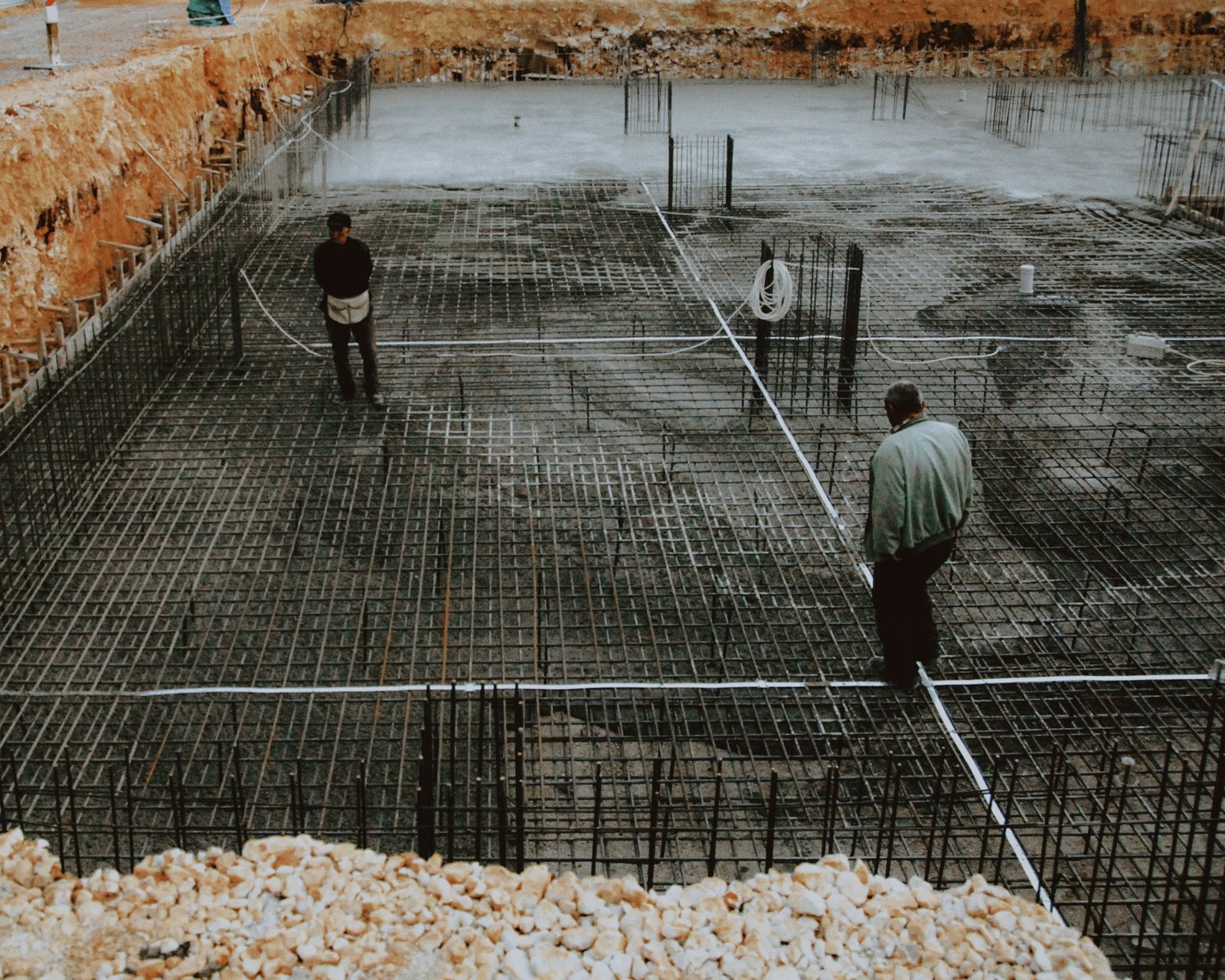
What we actually do about it
Underpinning
Extending or deepening the existing footing in controlled sections until it bears on soil that can carry the load. Also what you do when you are lowering a basement floor or excavating next to an existing foundation.
Piering for settlement
Push piers or helical piers driven through unstable soil to load-bearing strata, then brackets transferring the footing load onto them. Used where a section of the house has measurably dropped.
Bowing wall stabilization
Carbon fiber straps for early-stage bowing, steel I-beams for heavier deflection, and helical wall anchors when the wall needs to be held and potentially recovered toward plumb.
Block and stone wall rebuilds
Rebuilding failed sections of concrete block or fieldstone foundation wall, which is common in the older housing stock across Westchester and Fairfield County.
Structural crack repair
Epoxy injection where the repair must restore the wall's strength, and staple or carbon stitching across cracks that need mechanical reinforcement rather than just sealing.
Parging and resurfacing
Resurfacing deteriorated foundation walls, above and below grade, so the wall face stops shedding material and can take a waterproofing system.
Structural work and waterproofing are one job
Foundation damage and water usually travel together. Saturated soil is heavier soil, and heavier soil pushes harder on a wall. Water washing under a footing takes the fines with it and leaves a void. Freeze-thaw cycling in a saturated backfill expands against the wall every winter.
That is why stabilising a wall and leaving the drainage alone tends to buy time rather than solve the problem, and why we offer the drainage and waterproofing work alongside the structural repair.
Foundation repair questions
Which foundation cracks are serious?
As a rough guide: vertical hairline cracks in poured concrete are extremely common and usually shrinkage. Horizontal cracks are the ones to worry about, because they indicate soil pressure pushing the wall inward. Stair-step cracks in block often mean differential settlement. A crack that is wider at one end than the other, or one that has visibly grown, is moving and needs to be looked at.
That is a guide, not a diagnosis. Get eyes on it.
What is underpinning, in plain English?
Your footing sits on soil. If that soil cannot carry the load, either because it was always marginal, because it got wet, or because someone dug next to it, the footing sinks and the house above it cracks. Underpinning extends the foundation downward until it reaches soil or rock that will hold, transferring the load past the bad layer.
Can a bowing wall be fixed without replacing it?
Usually, yes, if it is caught before it fails. Carbon fiber straps, steel I-beams and helical wall anchors all stabilize a wall that is being pushed in by soil pressure. Anchors can often pull a wall back toward plumb over time. Once a wall has sheared or displaced past a certain point, rebuilding the section is the honest answer.
Do you fix the water problem too, or just the structure?
Both, and they should be done together. Soil pressure against a wall is a water problem before it is a structural one. Stabilizing a wall without fixing the hydrostatic pressure that bent it is treating the symptom.
Will my homeowners insurance cover this?
Usually not. Standard homeowners policies typically exclude damage from earth movement, settling and long-term water intrusion, though sudden events are sometimes treated differently. Read your policy or ask your agent, because coverage is between you and your insurer.
Get the crack looked at before it gets expensive
Estimates are free across all five counties we serve.